English
 Arabic
 French
 Spanish
 Portuguese
 Deutsch
 Turkish
 Dutch
Dutch
 Italiano
 Russian
 Romaian
 Portuguese (Brazil)
 Greek
Greek
Trapstar Hoodie & Pink Palm Puff Hoodie New stock for this Christmas top styles
Shopping |
2025-11-26 05:01:37
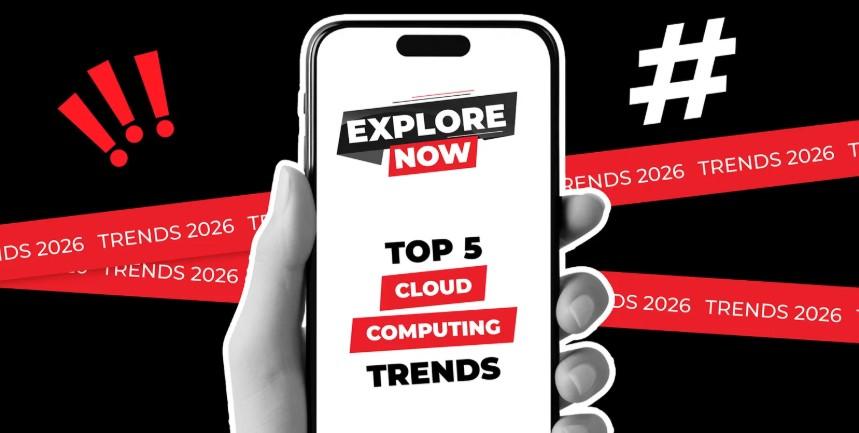
Cloud computing has evolved massively since its early days in the 1960s. What began as simple time-sharing of computing resources has now transformed into intelligent, automated, and AI-powered infrastructure. In 2026, the cloud is no longer just about storage — it is the backbone of modern digital innovation.
Today, businesses rely on the cloud for scalability, security, automation, and real-time insights. Let’s explore the top cloud computing trends shaping the future in 2026.
Artificial Intelligence is becoming deeply embedded in cloud platforms. In 2026, AI-native cloud environments will become the standard. Retrieval-Augmented Generation (RAG) allows cloud systems to fetch real-time data before generating responses, making AI outputs more accurate and contextual.
This shift enables smarter applications, real-time insights, and faster decision-making. Businesses adopting AI-powered cloud platforms will gain a major competitive advantage in automation and personalization.
Latency has always been a challenge in cloud computing. Micro data centers are solving this by bringing computing closer to users and devices. These compact edge data centers support real-time processing for IoT, smart factories, and immersive technologies like AR and VR.
In 2026, edge cloud adoption will grow rapidly as companies demand faster data processing and reduced network dependency. This trend will play a major role in industries like manufacturing, telecom, and smart cities.
Serverless computing is evolving beyond a single cloud provider. Modern serverless architectures now support hybrid and multi-cloud environments, allowing applications to run across multiple platforms seamlessly.
This helps businesses avoid vendor lock-in while improving flexibility and scalability. Developers can deploy and scale applications automatically without worrying about infrastructure management. As a result, serverless will become a key strategy for agile and cost-efficient cloud operations.
Security remains a top concern in cloud adoption. Confidential computing is emerging as a breakthrough solution that protects data even during processing. Using Trusted Execution Environments (TEEs), sensitive workloads remain encrypted and inaccessible to unauthorized entities.
In 2026, industries handling critical data — such as healthcare, finance, and government — will increasingly adopt confidential computing. This approach ensures stronger privacy, regulatory compliance, and protection against evolving cyber threats.
As cloud demand grows, so does energy consumption. Sustainability is becoming a major focus area in cloud innovation. Green data centers powered by renewable energy, energy-efficient cooling systems, and AI-driven optimization will define the next generation of cloud infrastructure.
Organizations are prioritizing eco-friendly cloud solutions to meet ESG goals and reduce carbon footprints. Sustainable cloud computing will not only benefit the environment but also enhance brand reputation and operational efficiency.
Cloud computing in 2026 is smarter, faster, and more responsible than ever before. AI-native platforms are transforming user experiences, edge computing is reducing latency, serverless models are simplifying deployment, confidential computing is strengthening security, and green cloud initiatives are driving sustainability.
Businesses that embrace these cloud trends will gain a strong competitive edge in the digital era. As cloud technology continues to evolve, companies investing in intelligent and secure cloud strategies will lead the future of innovation.