English
 Arabic
 French
 Spanish
 Portuguese
 Deutsch
 Turkish
 Dutch
Dutch
 Italiano
 Russian
 Romaian
 Portuguese (Brazil)
 Greek
Greek
Hollywood Content Price Drop: German Media Shift
Games |
2026-01-11 04:44:30
The construction industry in Dubai is characterized by speed, scale, and complexity. From the world's tallest towers to sprawling commercial districts, the built environment here is constantly evolving. In such a dynamic market, accurate data is the most valuable currency. However, for decades, one critical aspect of construction has lagged behind in terms of technology: As-Built documentation.
Traditionally, capturing the "as-built" conditions of a site meaning the exact dimensions and locations of elements as they were actually constructed—was a manual, tedious, and error-prone process. It involved teams of surveyors using tape measures, laser distance meters, and hand-sketched notes. This method often resulted in incomplete data and costly discrepancies when renovations or retrofits were required later.
Today, a technological shift is sweeping through the industry. 3d scanning dubai is redefining how we capture reality. By utilizing advanced LiDAR (Light Detection and Ranging) technology, we can now create digital replicas of physical spaces with millimeter-level accuracy. This article explores how this technology is transforming as-built documentation from a static compliance requirement into a dynamic, value-generating asset for developers and contractors across the UAE.
The Flaws of Traditional Documentation
To understand the revolution, we must first understand the limitations of the past. Traditional as-built drawings are rarely accurate. During the construction process, countless changes occur on site. A pipe is moved to avoid a beam. A wall is shifted to accommodate a duct. While these changes might be marked on a set of red-line drawings on site, they often fail to make it back into the final digital archives.
Furthermore, manual surveying is limited by human reach and time. A surveyor can only measure what they can touch or see clearly. Complex geometries, high ceilings, and intricate MEP (Mechanical, Electrical, and Plumbing) installations are nearly impossible to document accurately with a tape measure.
This leads to a "confidence gap" when the building needs to be renovated or managed. Facility managers and architects cannot trust the existing drawings. They are forced to re-survey the site, wasting time and money. The adoption of 3d scanning dubai closes this gap effectively. It provides a complete, objective record of the site that does not rely on human interpretation or selective measurement.
The Power of LiDAR Technology
3D laser scanning works by emitting millions of laser pulses per second. These pulses bounce off surfaces and return to the scanner, measuring the distance to every object in the room. The result is a "point cloud"—a dense collection of millions of data points that form a 3D image of the environment.
This process captures everything. It sees the slight deflection in a floor slab. It records the exact curve of a spiral staircase. It maps the complex web of pipes above a false ceiling. There is no "selection bias" where a surveyor decides what is important enough to measure. The scanner measures everything within its line of sight.
For projects in the UAE, where architectural designs often feature unique and organic shapes, this capability is indispensable. You cannot capture the geometry of the Museum of the Future with a tape measure. You need the high-fidelity capture that only professional 3d scanning dubai services can provide.
Accelerating Project Timelines
Time is a critical factor in Dubai’s construction sector. Delays in obtaining accurate site data can stall the design phase of a renovation project before it even begins. Traditional surveying of a large facility, such as a shopping mall or an airport terminal, could take weeks of on-site work.
Laser scanning drastically reduces this time on site. A modern scanner can capture a full 360-degree scan of a room in under two minutes. A team can document thousands of square meters in a single day.
This speed is vital for operational assets. If a hotel in Downtown Dubai needs to renovate its lobby, it cannot afford to shut down the area for a week just for measuring. With laser scanning, the data capture can happen overnight or during off-peak hours with minimal disruption to guests or operations. The team leaves the site with a complete dataset, eliminating the need for return visits to check missed dimensions.
From Point Cloud to BIM (Scan-to-BIM)
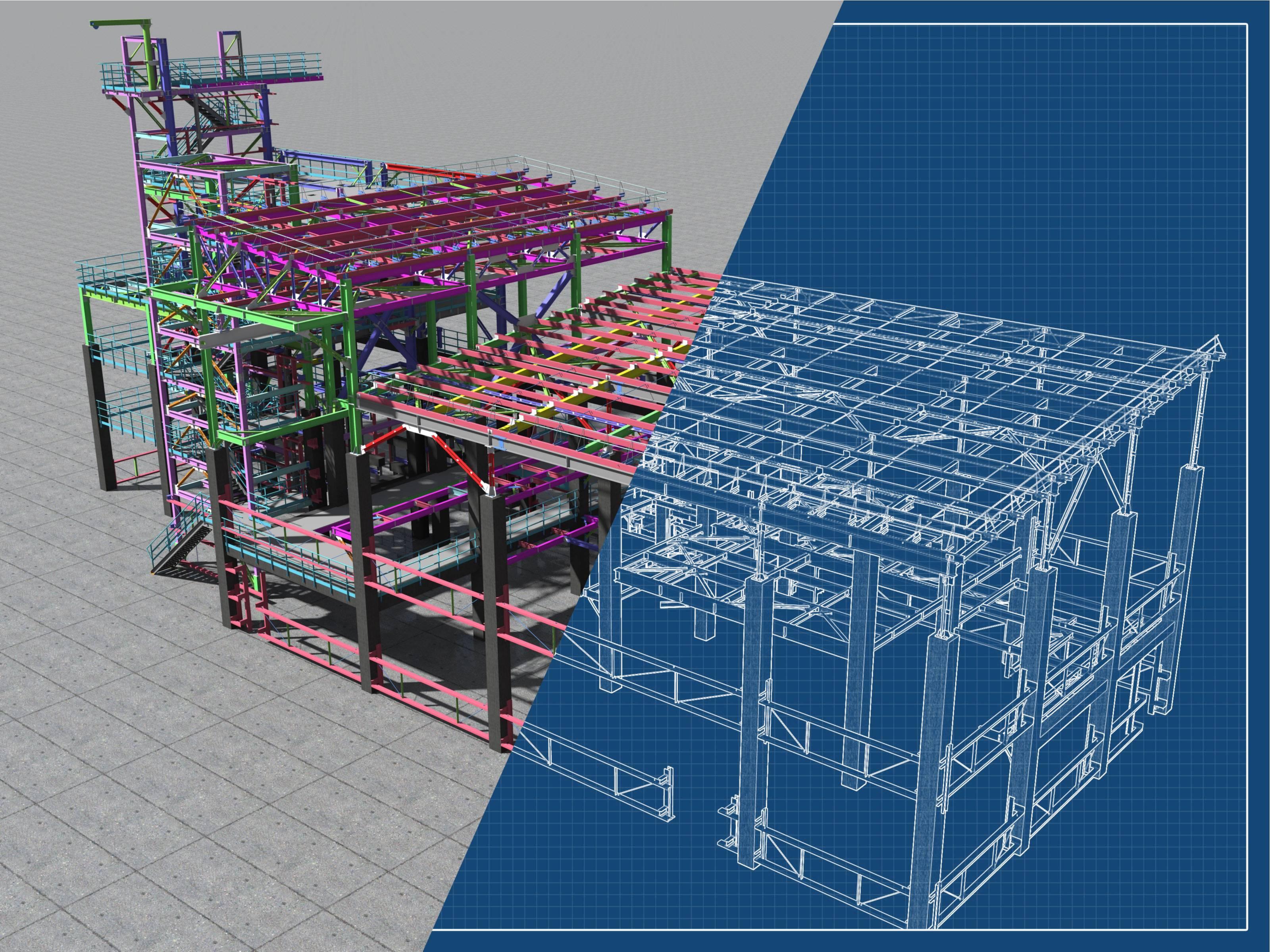
The point cloud is just the raw material. The true value of 3d scanning dubai is realized when this data is converted into a Building Information Model (BIM). This process is known as "Scan-to-BIM."
specialized modelers import the point cloud into software like Autodesk Revit. They use the points as a tracing guide to build an intelligent 3D model. Because they are tracing over reality, the resulting model is a perfect digital twin of the physical building.
This As-Built BIM model becomes the foundation for all future work.
This workflow transforms as-built documentation from a pile of unreliable 2D PDFs into a living, breathing database that serves the building for its entire lifecycle.
Mitigating Risk in Retrofits and Renovations
Renovation projects are notoriously risky. The phrase "unforeseen site conditions" is the most common reason for budget overruns. Contractors quote a price based on the old drawings, only to find that the reality behind the walls is completely different.
Using 3d scanning dubai eliminates the guesswork. By scanning the space before the design phase, the team uncovers the potential issues early.
Identifying these issues during the design phase costs very little. Identifying them during construction is expensive. It leads to demolition, rework, and change orders. Laser scanning acts as an insurance policy against these surprises, allowing contractors to bid with confidence and protecting clients from spiraling costs.
Enhancing Safety on Site
Construction sites and industrial facilities can be hazardous environments. Measuring high-level elements, such as roof trusses or industrial piping, traditionally required the use of scaffolding, cherry pickers, or ladders. This introduces working-at-height risks.
Laser scanners operate remotely. A scanner mounted on a tripod at ground level can accurately measure steelwork that is 20 meters in the air. This removes the need for surveyors to physically access dangerous areas.
In the context of industrial plants or energy infrastructure in the UAE, this safety benefit is paramount. We can capture accurate as-built data of a refinery or a district cooling plant without exposing personnel to hazardous machinery or chemicals. It is a non-contact method that prioritizes safety without compromising on data quality.
Quality Assurance and Construction Verification
As-built documentation is not just for old buildings; it is a critical tool for new construction verification. This process involves scanning the site at key milestones during the build to ensure that the work matches the design model.
For example, a contractor might scan the concrete slab before the floor finishes are applied. By overlaying this scan on the design model, they can instantly see if the floor is too high or too low. This allows them to correct the level while the concrete is still workable or adjust the finish thickness, rather than finding out later when the doors do not open.
This progressive scanning ensures that errors are caught immediately. It prevents the "compounding error" effect where a small mistake in the foundation leads to a massive problem in the roof. It provides the client with verified proof that the building was constructed according to the specifications.
Facilitating Digital Twins and Smart Cities
Dubai has ambitious goals to become one of the smartest cities in the world. Central to this vision is the concept of the Digital Twin—a virtual replica of physical assets that is connected to real-time data.
You cannot have a Digital Twin without an accurate geometric base. 3d scanning dubai provides the geometric truth required to build these twins. It creates the spatial framework upon which IoT (Internet of Things) sensors and building management systems can be visualized.
For asset owners, this means moving from reactive maintenance to predictive maintenance. Instead of waiting for a system to fail, they can monitor the digital twin. The scan data ensures that the location of every asset in the digital world corresponds exactly to its location in the real world. This is the future of facility management, and laser scanning is the gateway technology.
Legal Protection and Dispute Resolution
Construction disputes are an unfortunate reality of the industry. Disagreements often arise regarding the quantity of work completed or the quality of installation. In these situations, objective data is the best defense.
A laser scan provides an indisputable record of the site conditions at a specific point in time. It is a forensic snapshot. If a dispute arises regarding the flatness of a floor or the verticality of a wall, the scan data can settle the argument instantly. It is not an opinion; it is a measurement.
Having a library of scans from different stages of the project protects contractors from unjustified claims and ensures that clients get exactly what they paid for. It brings transparency to the contractual relationship.
Conclusion: The New Standard for Documentation
The days of relying on rolled-up paper drawings and manual measurements are numbered. The complexity of modern construction and the high cost of errors demand a more sophisticated approach. Laser scanning has proven itself to be faster, safer, and infinitely more accurate than traditional methods.
As the UAE continues to push the boundaries of architecture and engineering, the tools we use to document these achievements must keep pace. Adopting this technology is no longer just a competitive advantage; it is becoming a standard requirement for any serious project.
For developers, architects, and contractors looking to leverage this technology, choosing the right partner is essential. The hardware is only as good as the team operating it. Your BIM Partner offers premier services in this field.
Specializing in 3d scanning dubai and Scan-to-BIM workflows, Your BIM Partner delivers the precision you need to manage your assets effectively. Whether you are retrofitting a heritage site or verifying a new skyscraper, our team ensures that your digital data reflects your physical reality with absolute fidelity. Stop building on assumptions; start building on data with Your BIM Partner.