English
 Arabic
 French
 Spanish
 Portuguese
 Deutsch
 Turkish
 Dutch
Dutch
 Italiano
 Russian
 Romaian
 Portuguese (Brazil)
 Greek
Greek
MONOPOLY GO! x Harry Potter – Magical Crossover Event
Games |
2025-12-18 01:17:11
Protein Dispersion Aids Market Outlook
The global race to pack more protein into every calorie has hit a physical wall: the "Chalkiness Ceiling." As beverage giants and functional food startups push protein concentrations to unprecedented levels, the invisible chemistry of hydration is emerging as the industry’s make-or-break variable.
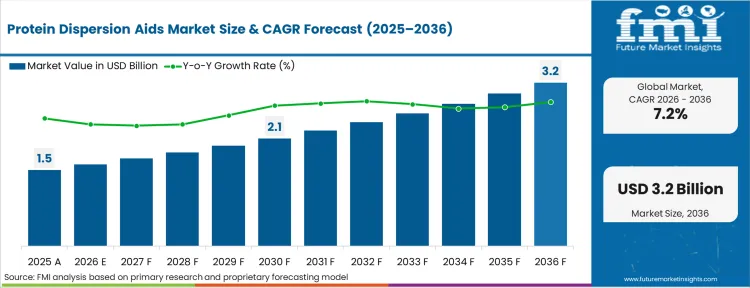
According to a comprehensive strategic outlook released today by Future Market Insights (FMI), the global Protein Dispersion Aids Market is set to surge from USD 1.6 billion in 2026 to a commanding USD 3.1 billion by 2036. This projected 7.2% CAGR signals a fundamental shift in food engineering—one where "chemical hydration kinetics" are systematically replacing expensive, energy-intensive mechanical shearing.
The Death of Reactive Troubleshooting
For years, formulation directors viewed grittiness or sedimentation as a "pilot phase" headache to be fixed with more agitation. That era is over. As consumer demand for Ready-to-Drink (RTD) beverages with 30g+ of protein grows, "fixing it in the mix" is no longer viable.
"Formulators are now being forced to move dispersion aids upstream, integrating them at the initial protein specification phase," says Nandini Roy Choudhury, Principal Analyst at FMI. "If you delay this integration, you functionally cap your protein load. You cannot market a 'smooth' mouthfeel if the protein hasn't been properly hydrated at a molecular level. In the clear-beverage sector, where there is zero tolerance for opacity or particulate, these aids have moved from discretionary additives to foundational ingredients."
Get Access to the Full Report Sample: Explore detailed forecasts, segment insights, and competitive analysis. https://www.futuremarketinsights.com/reports/sample/rep-gb-32314
The Plant-Based Paradox
The transition from whey to plant proteins (pea, soy, lentil) has created a "hydrophobicity crisis" in the supply chain. Plant proteins do not behave like their dairy counterparts; they often require customized, higher-dose phospholipid blends to prevent cross-linking and sedimentation.
Key Market Insights for Decision Makers:
Regional Velocity: India and China Lead Infrastructure Upgrades
The geography of growth is shifting toward regions rapidly modernizing their dairy and alternative-protein infrastructure.
The Competitive Edge: Beyond the Ingredient
The competitive landscape is no longer about selling a commodity; it’s about technical service. Giants like Cargill, ADM, and Kerry Group are leveraging their control over the entire supply chain—from the seed-crushing facility to the final functional blend.
"The interaction between a protein and a dispersion aid is highly specific," Roy Choudhury adds. "An aid optimized for pea protein may fail on a chickpea isolate. The winners in this market will be those who can provide bespoke hydration matching, effectively acting as an outsourced R&D arm for CPG brands."
Strategic Takeaway for Executives:
As the industry moves toward "pre-agglomerated" powders and allergen-free sunflower lecithins, the opportunity lies in upstream integration. Companies that secure long-term enzymatic modification partnerships today will be the ones defining the mouthfeel standards of 2036.
𝗪𝗵𝘆 𝗙𝗠𝗜: https://www.futuremarketinsights.com/why-fmi
How large is the protein dispersion aids market in 2026?
The global protein dispersion aids market is projected to reach USD 1.6 billion in 2026, reflecting the increasing adoption of dispersion technologies that help improve the solubility and stability of protein-rich formulations across food and beverage applications.
What will the market be valued at by 2036?
The market is expected to reach USD 3.1 billion by 2036, supported by growing demand for functional foods, sports nutrition products, and plant-based beverages that require efficient protein dispersion systems.
What CAGR is projected for the market?
The market is anticipated to expand at a compound annual growth rate (CAGR) of 7.2% between 2026 and 2036, driven by rising product innovation and increased use of high-protein ingredients in food processing.
Which product type segment leads the market?
Lecithin-based dispersion aids hold the largest share, accounting for 41.2% of the market, due to their strong emulsifying properties, compatibility with clean-label formulations, and widespread use in food and beverage manufacturing.
Which source segment dominates the market?
Plant-based sources lead the market with a 68.5% share, largely driven by the expansion of vegan, dairy-alternative, and plant-protein product categories worldwide.
Which application segment holds the largest share?
The beverages segment dominates with 35.4% of the market, as protein drinks, smoothies, and fortified beverages require advanced dispersion systems to maintain smooth texture and prevent sedimentation.
What factors are driving rapid market growth?
Growing demand for clean-label ingredients, the expansion of plant-based nutrition, and increasing consumption of protein-enriched foods and beverages are key factors accelerating the adoption of protein dispersion aids.
Related Reports:
About Future Market Insights (FMI)
Future Market Insights (FMI) is an ESOMAR-certified market intelligence provider serving clients in over 150 countries. Headquartered in Delaware, USA, FMI delivers data-driven insights to help businesses navigate global markets and identify high-growth opportunities.
For Press & Corporate Inquiries
Rahul Singh AVP - Marketing and Growth Strategy
Future Market Insights, Inc.
+91 8600020075
For Sales: sales@futuremarketinsights.com
For Media: Rahul.singh@futuremarketinsights.com
Web: https://www.futuremarketinsights.com/