English
 Arabic
 French
 Spanish
 Portuguese
 Deutsch
 Turkish
 Dutch
Dutch
 Italiano
 Russian
 Romaian
 Portuguese (Brazil)
 Greek
Greek
Netflix Tudum 2024: Live Event & Exclusive Reveals
Games |
2026-01-06 07:37:20
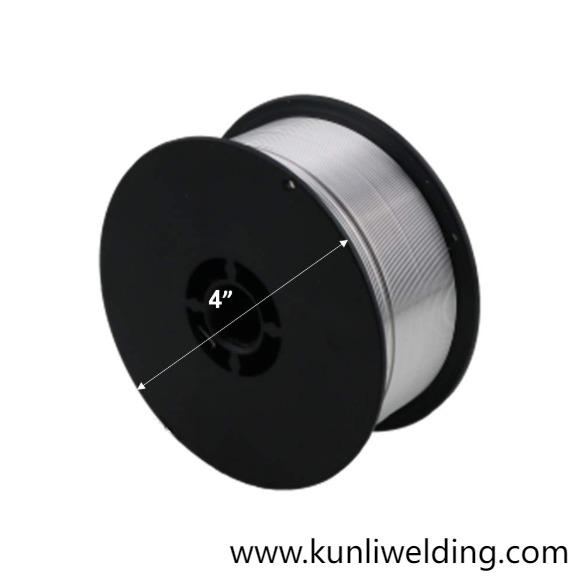
Flexible high-strand Aluminum Braided Wire is commonly used in applications where repeated bending and movement are expected. However, its fine strands, which provide flexibility, can present challenges during soldering and impact long-term reliability. Aluminum Braided Wire Manufacturers recommend using ferrules or tapered transitions, along with careful surface preparation, aluminum-compatible filler, and protective encapsulation, to minimize issues like corrosion and fatigue. This guide provides an approach for assembling these flexible aluminum conductors into durable, low-resistance joints.
Flexible high-strand conductors can experience stress where a stiff solder joint meets a flexible cable, leading to breakage due to concentrated bending forces at the interface. To counter this, it's essential to create a smooth mechanical transition that evenly disperses these forces away from the soldered area. While soldering enhances electrical contact, it should not increase the stiffness of the assembly unnecessarily.
To begin, the installation of a ferrule or tapered sleeve is recommended. These components help capture and compress the fine strands into a smooth, rounded profile, creating a gradual change from the flexible cable to the more rigid termination. Tapered ferrules are especially useful as they reduce stress concentration compared to abrupt transitions. Proper crimping of the ferrule is crucial, as a poor crimp can fail to distribute stress properly, causing the strands to slip or not bond correctly.
Surface preparation is another key step. Trim or prepare the conductor's end to ensure that the strands are clean and properly aligned. Use a stainless-steel brush or fine abrasive to remove any oxide just before applying flux. Once clean, apply a small amount of aluminum-specific flux to the freshly prepared area. It's important to apply the flux sparingly, especially on fine strands, to avoid leaving excess residue that could lead to corrosion.
Next, the ferrule or crimp area should be heated gently, with small ferrules benefiting from a fine-point iron or controlled hot-air nozzle. The heat activates the flux and allows the filler alloy to flow, filling any voids. The goal is to achieve a thin, uniform fill that enhances electrical contact without creating a large, rigid mass. It's essential to avoid overheating the flexible portion of the conductor, keeping the heat focused on the ferrule or crimp area to minimize damage to the rest of the wire.
Once the soldering process is complete, it's necessary to clean off any flux residue with an appropriate solvent and allow the joint to dry thoroughly. Following this, slide a flexible strain-relief sleeve over the joint, then add adhesive-lined heat-shrink tubing. This forms a moisture barrier while maintaining some flexibility in the assembly. For applications requiring repeated flexing, a soft elastomeric over-sleeve can be added to prevent sharp bends at the transition point.
For critical or high-cycle applications, it's a good idea to build test samples of the joints and subject them to the expected number of flex cycles. Observe where failures begin and make adjustments to the ferrule length, taper, or strain-relief design. Lengthening the mechanical transition can often help reduce stress at the soldered joint.
Corrosion prevention is another important consideration. Ensure that flux residues are completely cleaned off, and consider applying corrosion-inhibiting paste or dielectric grease inside the ferrule before sealing the joint, as long as the manufacturer's guidelines allow for it. Using an outer protective sleeve and avoiding direct exposure to corrosive elements like salt spray can further extend the joint's lifespan.
In demanding applications, periodic inspections are essential. If a joint begins showing signs of increased electrical resistance or visible damage, it should be reworked. Design changes, such as increasing the length of the mechanical transition or improving strain relief, may be necessary to ensure the assembly remains robust over time.
By selecting the appropriate ferrule, performing proper crimping, using conservative soldering techniques, and applying effective strain relief, flexible high-strand aluminum braided wire can be terminated in a way that minimizes the risks of corrosion and fatigue. For more detailed product recommendations and technical support on flexible aluminum braided wire assemblies, consider consulting supplier catalogs and product datasheets from manufacturers like Kunli at https://kunliwelding.psce.pw/8p6qdb .