English
 Arabic
 French
 Spanish
 Portuguese
 Deutsch
 Turkish
 Dutch
Dutch
 Italiano
 Russian
 Romaian
 Portuguese (Brazil)
 Greek
Greek
Apple's Privacy Nutrition Labels – Transparency or Hype?
Games |
2025-10-18 07:58:46
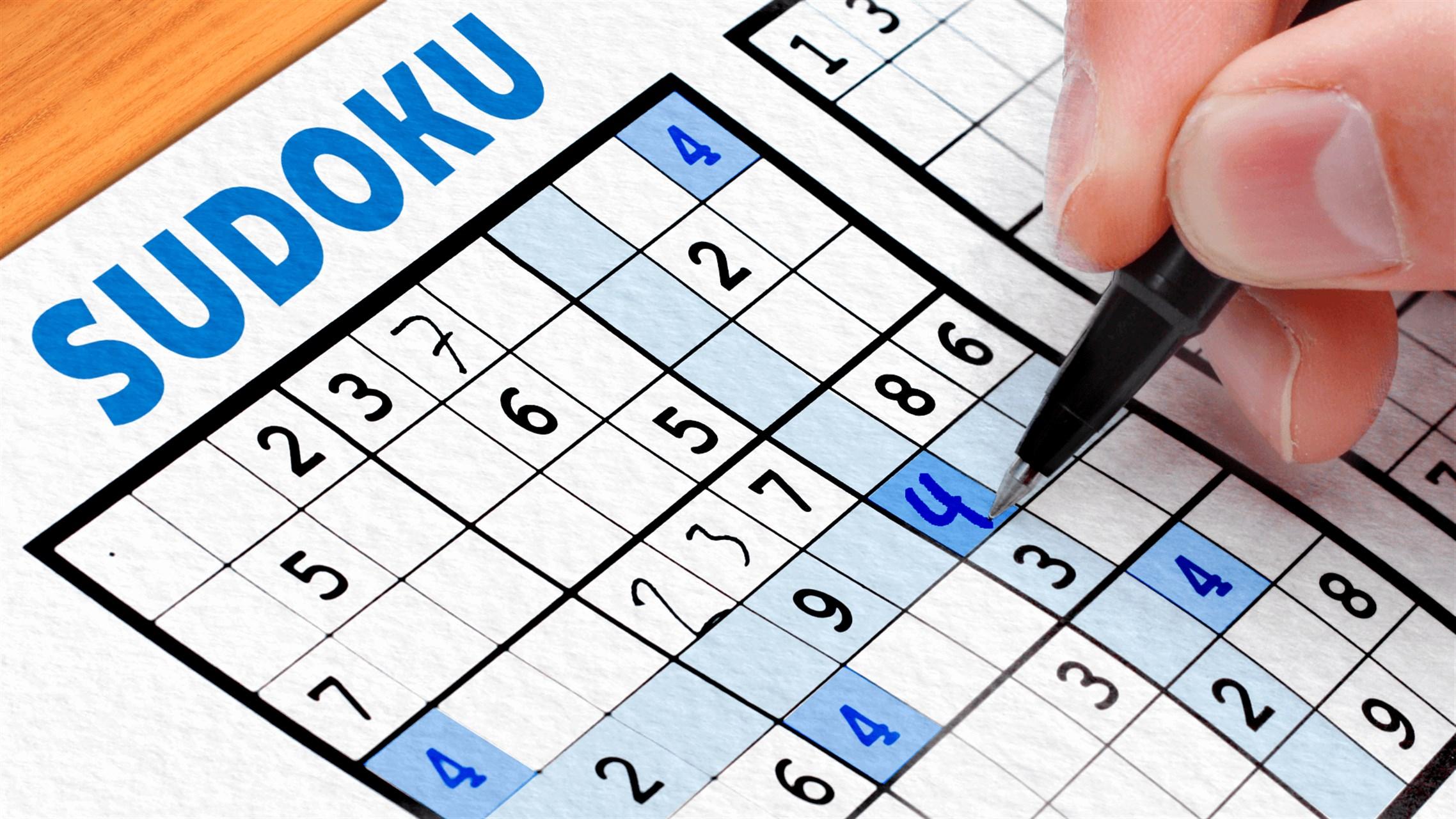
I still remember the first time I picked up a puzzle book at a small café on a rainy afternoon. I wasn’t looking for anything serious—just something to pass the time while waiting for a friend who was running late. Flipping through the pages, I stumbled upon a grid filled with numbers and empty squares. At the top of the page was a simple title: Sudoku.
At that moment, I had absolutely no idea what I was doing.
The rules looked easy enough: fill the grid so that every row, column, and 3×3 box contains numbers from 1 to 9. Simple, right? That’s what I thought. But about ten minutes later, I was staring at the page like it had personally offended me.
I placed a few numbers confidently… and then suddenly realized two 7s were sitting in the same row.
Great start.
Still, something about the puzzle pulled me in. It wasn’t loud or flashy like many games. It was quiet, patient, and strangely inviting—almost like it was daring me to slow down and think.
And that was the beginning of my small obsession.
What fascinates me most about Sudoku is how deceptively simple it looks. A grid, some numbers, a couple of rules. That’s it.
No fancy graphics.
No complicated controls.
Just logic.
But once you start filling in the blanks, you realize the puzzle has layers. At first you’re placing obvious numbers—those easy wins that give you a burst of confidence. Then the board slowly tightens, and suddenly every empty square feels like a mystery.
You start asking yourself questions like:
If a 5 goes here, does that break the column?
Wait… did I already use an 8 in this box?
Why does this one square feel impossible?
That’s when the real fun begins.
It’s like your brain shifts into detective mode. Every number becomes a clue, every empty cell a small case waiting to be solved.
There’s a particular moment I love when playing Sudoku. It’s the moment when a puzzle that looked completely impossible suddenly makes sense.
You stare at the grid for several minutes, feeling stuck.
Then something clicks.
Maybe you notice that only one number fits in a certain box. That number unlocks another row. Then another column. Suddenly the entire puzzle starts falling into place like dominoes.
It’s incredibly satisfying.
Not in a loud, celebratory way—more like a quiet victory. A small moment where you lean back and think:
"Okay… that was clever."
One evening I was sitting on a train during a long commute. My phone battery was almost dead, so scrolling through social media wasn’t an option.
Luckily, I had a small puzzle book in my bag.
I opened it and started working through a particularly tough grid. At first everything went smoothly, but halfway through I got completely stuck.
And I mean really stuck.
For almost twenty minutes I kept scanning the grid:
Row. Column. Box.
Row again. Column again.
Nothing.
At one point I even suspected the puzzle was printed incorrectly. That’s how convinced I was that no number could possibly fit anywhere.
Then I noticed something tiny—a single square where only one number was missing from the column.
That number unlocked a chain reaction.
Within five minutes the puzzle was finished.
I remember laughing quietly to myself on the train. A stranger probably thought I had just read a funny message, but really I was celebrating a solved grid.
Puzzle players will understand that feeling.
Let’s be honest: sometimes Sudoku can be incredibly annoying.
There are moments when you feel completely confident, only to discover later that you made a tiny mistake twenty moves ago. Suddenly the whole board collapses.
You erase half the grid.
You sigh.
You question your life choices.
But weirdly, that frustration is part of the charm.
Because when you finally fix the mistake and the puzzle starts working again, the victory feels even sweeter.
Every now and then something magical happens while playing.
Your brain enters what I like to call puzzle flow.
Numbers start appearing naturally. You don’t overthink them—you just see the patterns instantly. Rows, columns, boxes… everything connects.
It feels almost like solving music or rhythm rather than math.
And before you know it, the entire grid is complete.
Those moments are rare, but they’re amazing.
Over time I’ve picked up a few simple habits that make solving puzzles much smoother.
Instead of staring at the entire grid, I focus on one row or column at a time. Often there’s only one number missing, which makes the next move obvious.
Small steps add up quickly.
When puzzles get harder, I start writing tiny candidate numbers inside empty squares.
It may look messy, but it helps reveal patterns you’d otherwise miss.
Plus, crossing off possibilities feels strangely satisfying.
This might be the most underrated tip.
If a puzzle feels impossible, I just step away for a few minutes. When I come back, the answer often jumps out immediately.
Your brain sometimes just needs a reset.
After playing for years, I’ve realized that Sudoku isn’t just a puzzle—it’s a little lesson in patience.
You can’t rush it.
If you try to force answers, you’ll make mistakes. The puzzle rewards calm thinking and observation. Sometimes the best move is simply waiting until the pattern becomes clear.
That mindset actually carries into everyday life.
Problems rarely solve themselves through panic. They usually unfold through small, careful steps—just like filling a grid one number at a time.
There are thousands of games out there today, many with incredible graphics and endless updates. Yet I still find myself returning to a simple grid of numbers.
Why?
Because it’s relaxing.
It’s one of the few activities that slows my mind down while still keeping it active. No notifications, no noise—just logic and curiosity.
And every puzzle feels like a tiny story:
Confusion → discovery → satisfaction.
Not bad for nine little numbers.