English
 Arabic
 French
 Spanish
 Portuguese
 Deutsch
 Turkish
 Dutch
Dutch
 Italiano
 Russian
 Romaian
 Portuguese (Brazil)
 Greek
Greek
High Content Screening Market: Size, Share, and Future Growth
Other |
2025-09-25 05:08:15
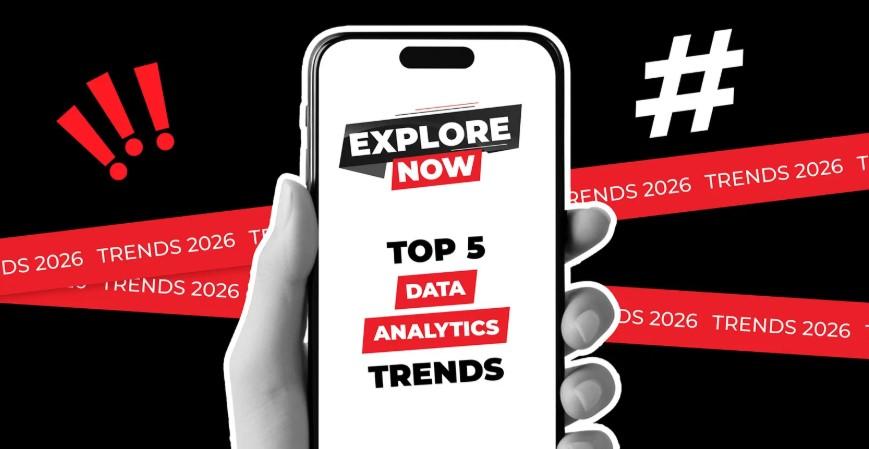
Data analytics has become one of the most powerful tools for modern businesses. Just like detectives use clues to solve cases, companies use data analytics to discover patterns, trends, and insights that help them make smarter decisions.
In 2026, data analytics is evolving rapidly with the help of artificial intelligence, automation, and real-time processing. Businesses are no longer using data only to understand the past — they are using it to predict the future and drive innovation.
Let’s explore the top data analytics trends shaping 2026.
Generative AI and machine learning are making data analytics more accessible than ever. Instead of writing complex queries, users can now ask questions in natural language and get instant insights.
AI-powered analytics tools allow business teams to generate reports, dashboards, and predictions through simple conversations. This trend is democratizing data, enabling non-technical users to make data-driven decisions faster and more confidently.
In today’s fast-moving digital world, businesses can’t wait hours or days for insights. Real-time analytics allows organizations to process and act on data instantly.
From fraud detection and dynamic pricing to supply chain optimization, real-time data processing is becoming a necessity. Companies adopting real-time analytics will gain faster decision-making, better customer experiences, and improved operational efficiency.
As businesses collect more sensitive data, privacy and security are becoming top priorities. In 2026, organizations are investing heavily in secure analytics frameworks and privacy-enhancing technologies.
Technologies like zero-trust architecture, encryption, and secure data collaboration will help businesses protect user information while still generating valuable insights. Data privacy will also become a competitive advantage in building customer trust.
With the rise of IoT devices, data is increasingly generated at the edge — closer to users and machines. Edge analytics processes data locally instead of sending everything to the cloud.
This enables faster insights, lower latency, and reduced bandwidth usage. Industries like manufacturing, logistics, healthcare, and smart cities are rapidly adopting edge analytics for real-time monitoring and automation.
Data alone is not enough — how you present it matters. In 2026, data storytelling will become a key differentiator for businesses.
Modern analytics platforms are combining visualization, AI narratives, and interactive dashboards to turn complex data into easy-to-understand stories. Clear data storytelling helps leaders make better decisions and improves collaboration across teams.
Data analytics in 2026 is becoming smarter, faster, and more user-friendly. Conversational AI is simplifying insights, real-time analytics is accelerating decisions, privacy-first frameworks are strengthening trust, edge analytics is powering IoT growth, and data storytelling is transforming how insights are communicated.
Businesses that embrace these trends will unlock new opportunities and gain a strong competitive edge in the digital economy. As data continues to grow, organizations that use analytics strategically will lead the future of innovation.