English
 Arabic
 French
 Spanish
 Portuguese
 Deutsch
 Turkish
 Dutch
Dutch
 Italiano
 Russian
 Romaian
 Portuguese (Brazil)
 Greek
Greek
Rising Demand, Scaling Production: Approaches to Thrive in the Expanding Chemical Injection Skids Market
Other |
2025-09-30 09:44:41
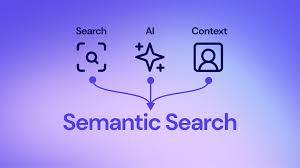
In the digital age, content discovery is no longer about matching keywords exactly. Search engines have evolved to understand user intent, context, and meaning behind queries. This shift is largely driven by semantic search, which plays a pivotal role in how content is discovered, ranked, and consumed online. For businesses, marketers, and content creators, understanding semantic search is essential to optimize content effectively and ensure it reaches the right audience.
Semantic search refers to the ability of search engines to interpret the intent and contextual meaning of search queries rather than just focusing on exact keyword matches. Traditional keyword-based search would return results containing the precise words entered, often ignoring context. Semantic search, on the other hand, aims to understand what the user truly wants to know.
For example, if someone searches for “best places to eat Italian food near me,” semantic search helps Google or Bing recognize that the user is seeking nearby Italian restaurants, not a history of Italian cuisine or recipes.
Semantic search leverages natural language processing (NLP), machine learning, and knowledge graphs to deliver results that are more relevant, personalized, and useful. Google’s Hummingbird, RankBrain, and BERT updates are key milestones in the development of semantic search capabilities.
Semantic search transforms content discovery in several critical ways:
Understanding User Intent: It helps search engines comprehend whether a query is informational, transactional, navigational, or commercial. By analyzing intent, search engines can deliver content that aligns with what users are actually looking for.
Contextual Relevance: Semantic search looks beyond the exact terms and considers synonyms, related concepts, and context. This allows users to find content even if it does not contain the precise keywords they typed.
Enhanced User Experience: By providing more accurate and context-aware results, semantic search reduces the effort users spend sifting through irrelevant content, improving satisfaction and engagement.
Supporting Rich Results: Semantic search enables features like featured snippets, knowledge panels, and related questions. These formats help users discover information quickly and increase content visibility.
Semantic search operates through several core mechanisms:
NLP allows search engines to understand queries written in human language. It enables search algorithms to interpret nuances, grammar, and context. For example, a search for “top SEO strategies for small business 2026” is interpreted as an intent to learn about actionable strategies for a specific timeframe, rather than just pages containing “SEO” and “small business.”
Knowledge graphs connect entities—people, places, things—and show their relationships. Google uses its knowledge graph to provide quick answers and enhance understanding. For instance, searching “Albert Einstein” may surface information about his biography, achievements, and related scientists.
AI-driven algorithms like RankBrain learn from user behavior to improve relevance. They analyze factors such as click-through rates, dwell time, and content engagement to understand which results satisfy users best.
Semantic search has a profound effect on how content is found online:
Broader Keyword Coverage: Websites can rank for a wider range of related terms without stuffing exact keywords. For example, a page about “healthy meal plans” may rank for searches like “nutritious diet ideas” or “balanced weekly meals.”
Long-Tail Queries: Semantic search improves visibility for complex or conversational queries. Users increasingly type full questions instead of single keywords, and semantic search ensures content appears for these queries.
Improved Content Relevance: Pages optimized for semantic meaning rather than only keywords are more likely to match user intent, resulting in higher engagement, longer sessions, and better rankings.
To leverage semantic search for content discovery, businesses should focus on strategies that emphasize meaning and context:
Understanding what the user wants is crucial. Create content that answers questions, solves problems, or guides decisions. Identify whether queries are informational, commercial, navigational, or transactional, and tailor content accordingly.
Incorporate synonyms, related phrases, and topic clusters instead of repeating exact keywords. This helps search engines understand the broader context of your content.
Adding structured data provides explicit context about your content to search engines. This enhances rich results and improves discoverability for semantic queries.
High-quality, comprehensive content performs better in semantic search. Pages that explore topics in depth, with subtopics, examples, and explanations, signal authority and relevance.
Semantic search drives many snippets and answer boxes. Structuring content with clear headings, bullet points, and concise answers improves the chances of appearing in these results.
Organizing content around central topics and interlinked subtopics helps search engines understand the relationship between pages. This boosts semantic relevance and overall site authority.
For modern SEO, semantic search is no longer optional. It influences how content is structured, written, and optimized:
Focus shifts from individual keywords to holistic topics.
Internal linking strategies emphasize semantic relationships.
Metadata, headings, and alt text reflect context rather than just keywords.
Content is designed to satisfy user questions comprehensively.
Leading businesses, especially those working with Best SEO Companies in USA, understand that semantic search is essential for maintaining consistent visibility, improving content relevance, and driving long-term sustainable growth in organic traffic across digital platforms.
Several tools help optimize content for semantic search:
SEO Analytics Platforms: Track keyword clusters, related terms, and semantic opportunities.
Content Optimization Tools: Suggest topic coverage and related phrases based on search intent.
Knowledge Graph and Schema Tools: Provide structured data templates to enhance context.
While semantic search improves content discovery, it also brings challenges:
Algorithm Complexity: Search engines are continually evolving, making it necessary to stay updated on changes.
Content Overlap: Competing pages may confuse algorithms if topics are not clearly differentiated.
Measuring ROI: Semantic search may drive engagement and brand visibility that is harder to quantify than direct conversions.
Semantic search continues to evolve with AI and machine learning advancements. Voice search, conversational AI, and generative search engines are increasingly dependent on semantic understanding. This trend emphasizes the importance of creating content that is context-rich, user-focused, and highly relevant.
Semantic search has fundamentally changed how content is discovered. By understanding intent, context, and meaning, search engines deliver more accurate, useful, and engaging results. For businesses and marketers, optimizing for semantic search is essential to stay visible, relevant, and competitive. Incorporating user-focused content, structured data, topic clusters, and semantic strategies ensures long-term discoverability. Companies working with experienced SEO partners, including the Best SEO Companies in USA, are better positioned to leverage these techniques for maximum impact.
Semantic search is a method used by search engines to understand the intent and context of a query rather than just matching exact keywords. It considers meaning, relationships, and context to deliver relevant results.
By understanding context and intent, semantic search connects users with content that meets their needs, even if the exact keywords are not present, improving engagement and satisfaction.
Businesses can optimize by focusing on user intent, using related keywords, creating in-depth content, implementing structured data, and organizing content into topic clusters.
Yes, semantic search influences rankings by prioritizing content that matches user intent, relevance, and quality, rather than just keyword usage.
Tools include SEO analytics platforms, content optimization software, and schema/structured data tools that identify semantic opportunities and improve contextual relevance.