English
 Arabic
 French
 Spanish
 Portuguese
 Deutsch
 Turkish
 Dutch
Dutch
 Italiano
 Russian
 Romaian
 Portuguese (Brazil)
 Greek
Greek
Hawkins Prequel – Stranger Things Stage Debut in London
Games |
2025-09-27 00:37:46
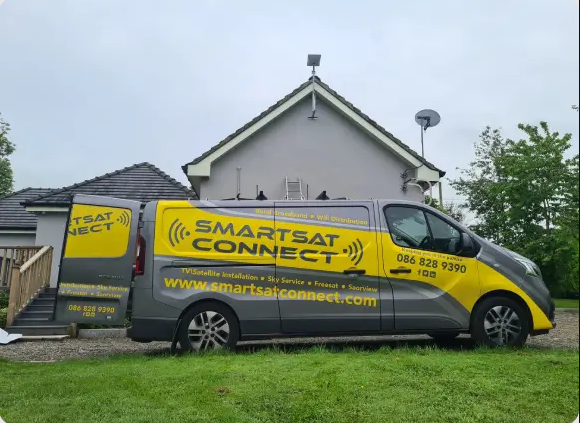
The telecommunications landscape in Ireland is currently undergoing a systemic migration from the Public Switched Telephone Network (PSTN)—the traditional copper landline—to digital VoIP (Voice over IP) services. While this modernisation offers efficiency benefits, it introduces a specific risk profile for the demographic aged 70+, particularly in rural locations. Smartsat connect has analysed the reliability metrics of this transition and identified a critical gap in emergency connectivity.
The core issue lies in infrastructure redundancy. Traditional copper landlines carried their own low-voltage power, meaning they continued to function during a mains electricity outage. Digital lines, however, require a powered broadband router. In the event of a storm-induced power cut, the landline fails immediately. For elderly residents who rely on this line for emergency calls or monitored personal alarms, this single point of failure is a statistically significant risk.
The mobile network offers a superior redundancy model. Mobile masts are typically equipped with battery backups or generators, ensuring the network remains live during local power outages. However, data on rural housing stock indicates a high prevalence of stone and mass concrete construction, which causes severe signal attenuation (blocking). A mobile device that cannot connect to the mast due to wall thickness is just as useless as a dead landline.
This is where a Mobile Phone Signal Booster Ireland wide becomes a critical infrastructure upgrade. By installing an active repeater, we can equalise the indoor signal with the outdoor signal strength. Technical tests show that these systems can improve indoor signal reliability from <40% to >99%. This ensures that mobile-based personal alarms and emergency calls can connect instantly from anywhere in the property, not just near a window.
Furthermore, transitioning to a mobile-only communication setup can offer long-term cost savings by eliminating line rental charges. However, the primary value proposition is risk mitigation. Ensuring a reliable, always-on communication channel is not just a convenience; it is a safety requirement for independent living in the digital age.
Conclusion The decommissioning of copper landlines necessitates a shift in how we secure home communications for the elderly. A mobile signal booster mitigates the risks associated with digital line failures during power cuts, providing a robust, data-backed solution for emergency safety.
Call to Action Ensure your relatives are protected and connected by contacting Smartsat connect. https://www.smartsatconnect.ie/