English
 Arabic
 French
 Spanish
 Portuguese
 Deutsch
 Turkish
 Dutch
Dutch
 Italiano
 Russian
 Romaian
 Portuguese (Brazil)
 Greek
Greek
Marvel Rivals Challenges – Key Issues & Community Reactions
Games |
2025-11-29 04:05:36
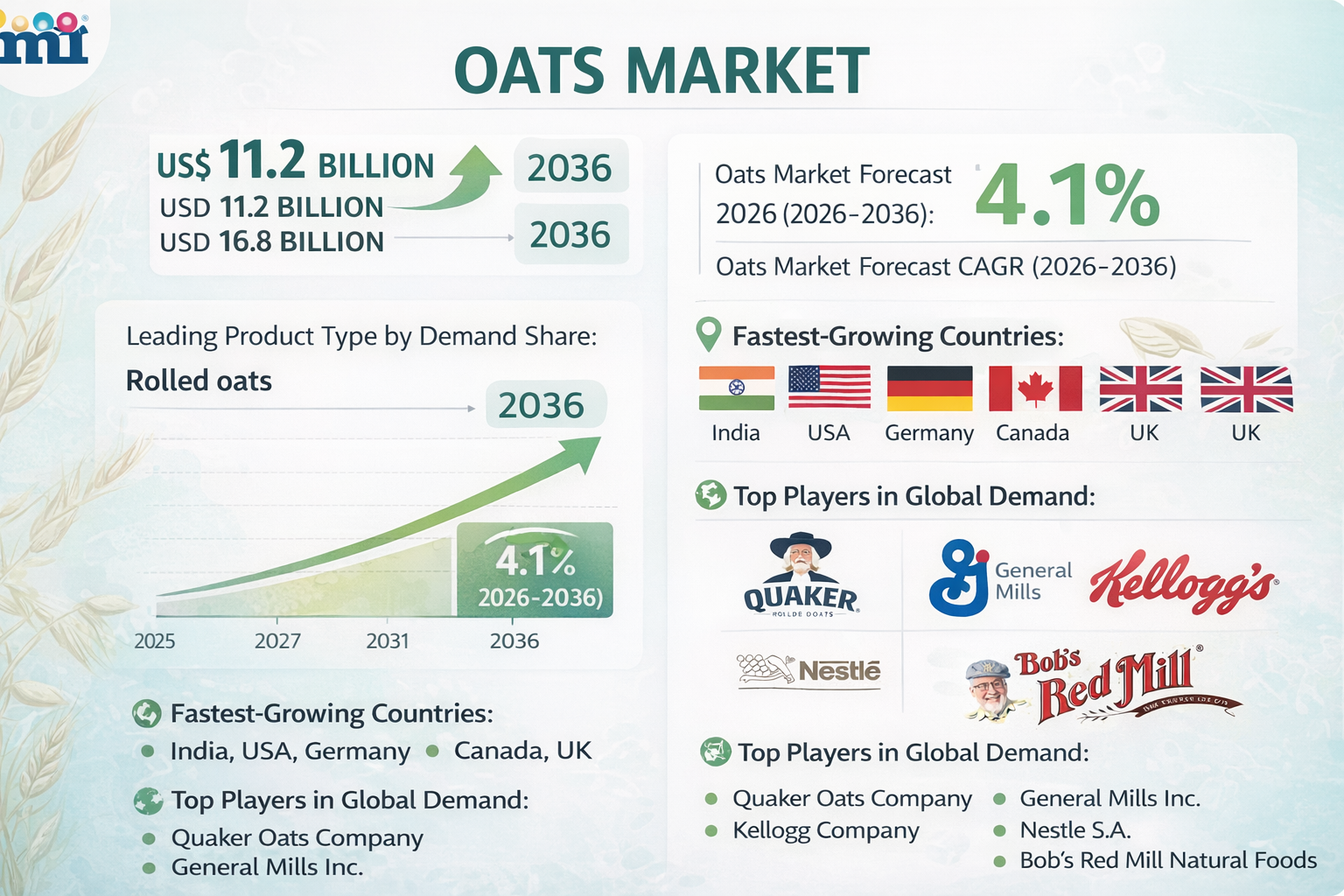
Oats Market Forecast and Outlook 2026 to 2036
The global oats market is entering a decade of steady and structural expansion, with revenues projected to grow from USD 11.2 billion in 2026 to USD 16.8 billion by 2036. According to FMI analysis, the market is expected to advance at a compound annual growth rate (CAGR) of 4.1% over the forecast period.
This growth signals more than incremental demand gains. It reflects a broader transformation in staple food consumption patterns, as oats transition from a traditional breakfast cereal to a multifunctional ingredient embedded in modern health, sustainability, and plant-based nutrition trends.
From Breakfast Bowl to Functional Ingredient
Historically positioned as a morning meal staple, oats are now being reformulated and reimagined across diverse product categories. Manufacturers are leveraging oats’ nutritional profile and functional properties to expand into snacks, beverages, dairy alternatives, and clean-label formulations.
Consumers are increasingly seeking foods that deliver measurable health benefits without compromising convenience or taste. Oats, rich in fiber and widely associated with heart health and digestive wellness, are aligning naturally with these expectations.
FMI notes that this repositioning is helping oats secure a stronger role in everyday diets, extending beyond porridge and granola into bars, ready-to-drink beverages, bakery products, and plant-based alternatives.
Health and Wellness Driving Core Demand
A central driver of the oats market’s 4.1% CAGR is the sustained focus on preventive health. Consumers are becoming more attentive to nutritional labels and ingredient transparency, pushing demand toward whole grains and minimally processed foods.
Key health-oriented factors shaping market growth include:
Oats fit squarely within these dietary priorities. As a whole grain ingredient associated with cardiovascular support and gut health, oats are being integrated into functional food innovations that cater to health-conscious demographics.
Plant-Based Momentum Strengthens Market Outlook
The expansion of plant-based diets is reinforcing oats’ market trajectory. As consumers reduce dairy intake and explore alternative protein and grain sources, oats are becoming a foundational ingredient in plant-based product development.
Oat-based beverages and dairy substitutes are contributing to incremental market value, supported by consumer perceptions of sustainability and digestibility. This plant-forward shift is not limited to niche segments; it is influencing mainstream food and beverage portfolios globally.
FMI estimates that the integration of oats into multifunctional product lines will remain a critical value-creation strategy through 2036.
Sustainability and Supply Chain Evolution
Beyond health attributes, oats are increasingly associated with sustainable agriculture and environmentally conscious consumption patterns. As climate considerations shape food purchasing decisions, grains perceived as resource-efficient and adaptable are gaining favor.
Manufacturers are responding by promoting traceability, responsible sourcing, and clean processing methods. This alignment between environmental messaging and product formulation is helping brands differentiate in competitive retail landscapes.
The oats market’s projected rise to USD 16.8 billion by 2036 reflects not only consumption growth but also premiumization opportunities within value-added segments.
Regional and Category Diversification
While traditional hot cereal consumption remains stable, market expansion is increasingly driven by diversification across categories and geographies. Emerging markets are incorporating oats into localized food formats, while mature markets are accelerating innovation in fortified and convenience-based offerings.
Product developers are focusing on:
This diversification is reducing category concentration risk and expanding oats’ relevance across age groups and consumption occasions.
Long-Term Structural Shift
FMI analysis highlights that the oats market’s forecast growth is rooted in structural dietary change rather than short-term trends. Consumers are redefining staple foods based on nutritional value, versatility, and sustainability credentials.
As oats evolve from a commodity breakfast grain to a multifunctional ingredient, they are securing a more resilient demand base. The projected increase from USD 11.2 billion in 2026 to USD 16.8 billion in 2036 underscores the category’s adaptability and long-term relevance.
With a steady CAGR of 4.1%, the oats market is positioned for consistent expansion over the next decade. The convergence of heart health awareness, digestive wellness priorities, clean-label expectations, and plant-based nutrition adoption is creating a favorable operating environment for manufacturers and stakeholders.
By 2036, oats are expected to be firmly established not just as a traditional staple, but as a strategic ingredient shaping the future of functional and sustainable food systems worldwide.
About Future Market Insights (FMI)
Future Market Insights, Inc. (FMI) is an ESOMAR-certified, ISO 9001:2015 market research and consulting organization, trusted by Fortune 500 clients and global enterprises. With operations in the U.S., UK, India, and Dubai, FMI provides data-backed insights and strategic intelligence across 30+ industries and 1,200 markets worldwide.
Contact Us:
Future Market Insights Inc.
Christiana Corporate, 200 Continental Drive,
Suite 401, Newark, Delaware – 19713, USA
T: +1-347-918-3531
For Sales Enquiries: sales@futuremarketinsights.com