English
 Arabic
 French
 Spanish
 Portuguese
 Deutsch
 Turkish
 Dutch
Dutch
 Italiano
 Russian
 Romaian
 Portuguese (Brazil)
 Greek
Greek
Graph Database Market: Trends, Opportunities & Future Outlook
Home |
2026-02-05 13:21:45
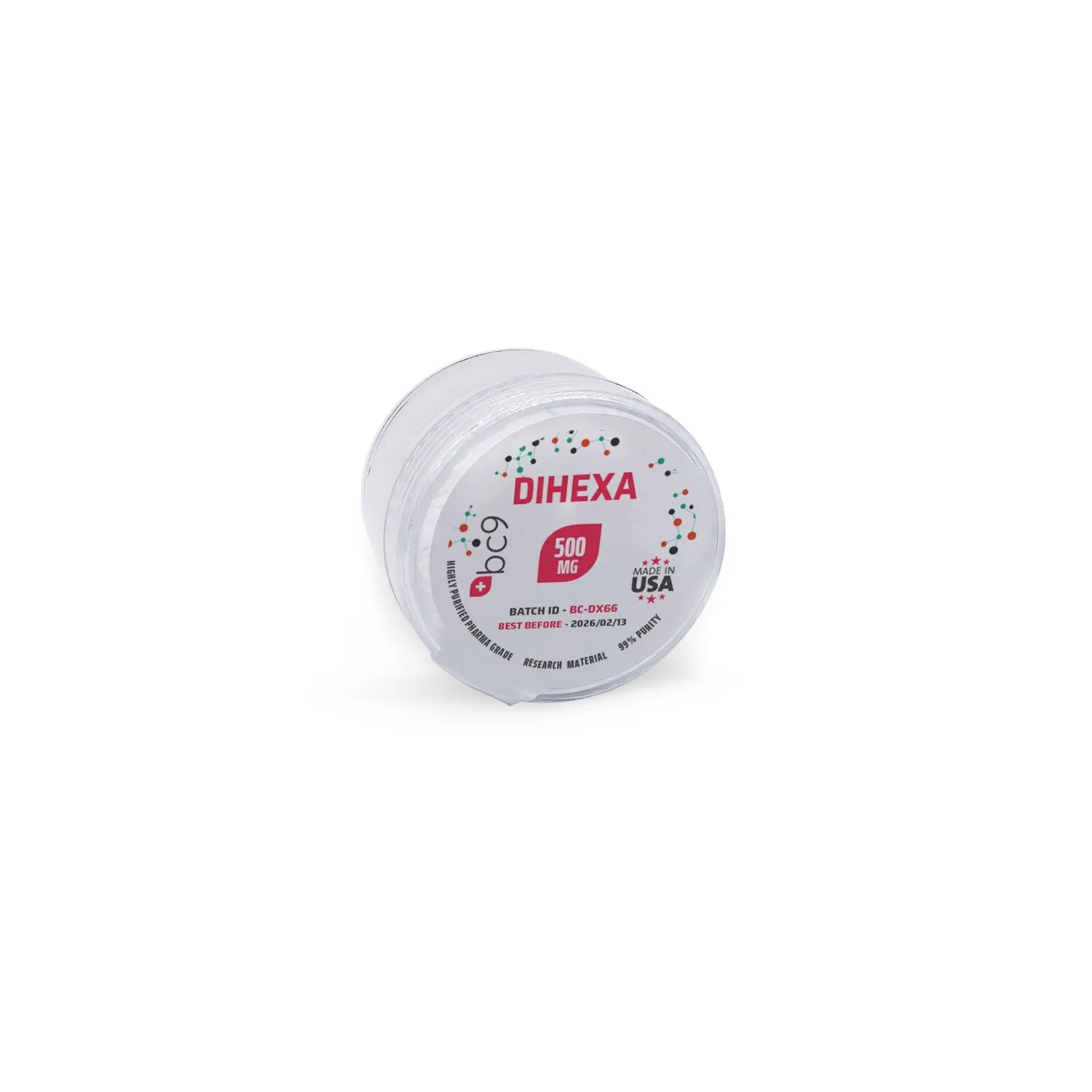
Dihexa is a synthetic small molecule derived from angiotensin IV analogs and has gained significant attention in neuroscience research for its remarkable ability to stimulate synaptic growth. Unlike traditional neurotrophic agents that act indirectly, Dihexa demonstrates high affinity for the hepatocyte growth factor (HGF) and its receptor c-Met, triggering cellular pathways associated with neurogenesis, synaptogenesis, and cognitive resilience. Researchers investigating neurodegenerative conditions view Dihexa as one of the most potent compounds ever identified for promoting structural connectivity within the brain.
The importance of Dihexa lies in its oral bioavailability and its ability to cross the blood–brain barrier efficiently. Many neurotrophic peptides fail at this hurdle, but Dihexa exhibits stability and permeability that make it uniquely suited for central nervous system research. Preclinical models show that Dihexa can enhance long-term potentiation, the biological foundation of learning and memory, at concentrations far lower than classical growth factors.
At the core of Dihexa’s activity is its modulation of the HGF/c-Met signaling cascade. When Dihexa binds to this receptor complex, it initiates a sequence of intracellular events involving PI3K/AKT and MAPK/ERK pathways. These pathways regulate cytoskeletal remodeling, dendritic spine maturation, and the formation of new synaptic boutons.
Dihexa does not merely increase neurotransmitter levels; it alters the physical architecture of neurons. Microscopy studies reveal expanded dendritic arbors and increased synapse density after Dihexa exposure. This structural plasticity distinguishes Dihexa from stimulants or cholinergic agents that offer only transient neurotransmission enhancement.
Key biological actions include:
These combined effects suggest that Dihexa functions as a true synaptogenic catalyst rather than a symptomatic cognitive enhancer.
In transgenic models of Alzheimer’s pathology, Dihexa has demonstrated the ability to restore performance in maze and recognition tasks even in the presence of amyloid burden. The compound appears to bypass plaque-related toxicity by rebuilding alternative neural networks, effectively creating new routes for information processing.
Post-injury brains suffer from disrupted connectivity more than from cell death alone. Dihexa’s promotion of axonal sprouting provides a theoretical strategy for reconnecting damaged circuits. Animal studies report improved motor coordination and memory retention when Dihexa is administered during recovery phases.
Normal aging involves gradual synaptic loss. Dihexa research indicates reversal of this process, with aged subjects showing synaptic densities comparable to much younger controls. This positions Dihexa as a valuable tool for studying resilience mechanisms in the aging brain.
Dihexa’s design solved several limitations of earlier neurotrophic peptides:
These properties make Dihexa practical for long-term experimental protocols where continuous synaptic remodeling is required.
Toxicological evaluations to date show a wide margin between active and adverse concentrations. Dihexa does not exhibit the hypertensive effects associated with its angiotensin lineage, as it lacks activity at classical angiotensin receptors. Cellular assays reveal minimal pro-inflammatory signaling, and electrophysiological studies have not demonstrated seizure liability at research doses.
Responsible investigation emphasizes that Dihexa remains a research compound rather than an approved therapeutic. Its mechanisms continue to be mapped, and controlled studies are essential for understanding long-term modulation of the HGF/c-Met system.
Most cognitive agents operate by increasing acetylcholine, dopamine, or glutamate availability. Dihexa differs fundamentally by creating new synapses instead of squeezing more performance from existing ones. This regenerative orientation places Dihexa closer to disease-modifying strategies than to symptomatic enhancers.
|
Category |
Typical Action |
Dihexa Action |
|
Racetams |
Neurotransmission efficiency |
Structural synapse growth |
|
Cholinergics |
ACh elevation |
Network reconstruction |
|
Stimulants |
Dopamine release |
Dendritic expansion |
|
Peptide factors |
Poor BBB entry |
High CNS penetration |
The frontier for Dihexa investigation includes:
As laboratories refine delivery systems and analog design, Dihexa serves as a blueprint for an entirely new class of synapse-first neurorestorative molecules.
Dihexa represents a paradigm shift in neuroscience research. By directly engaging the biological machinery responsible for building synapses, it offers a route toward genuine reconstruction of neural circuitry. The compound’s potency, brain penetration, and mechanistic clarity make Dihexa one of the most compelling tools for understanding how memories are formed, lost, and potentially rebuilt. For researchers pursuing breakthroughs in cognitive disorders, Dihexa stands at the center of modern synaptic growth science.