English
 Arabic
 French
 Spanish
 Portuguese
 Deutsch
 Turkish
 Dutch
Dutch
 Italiano
 Russian
 Romaian
 Portuguese (Brazil)
 Greek
Greek
Zero Trust Network Access Services: Closing the Gaps in Traditional Security
Networking |
2025-09-19 07:01:39
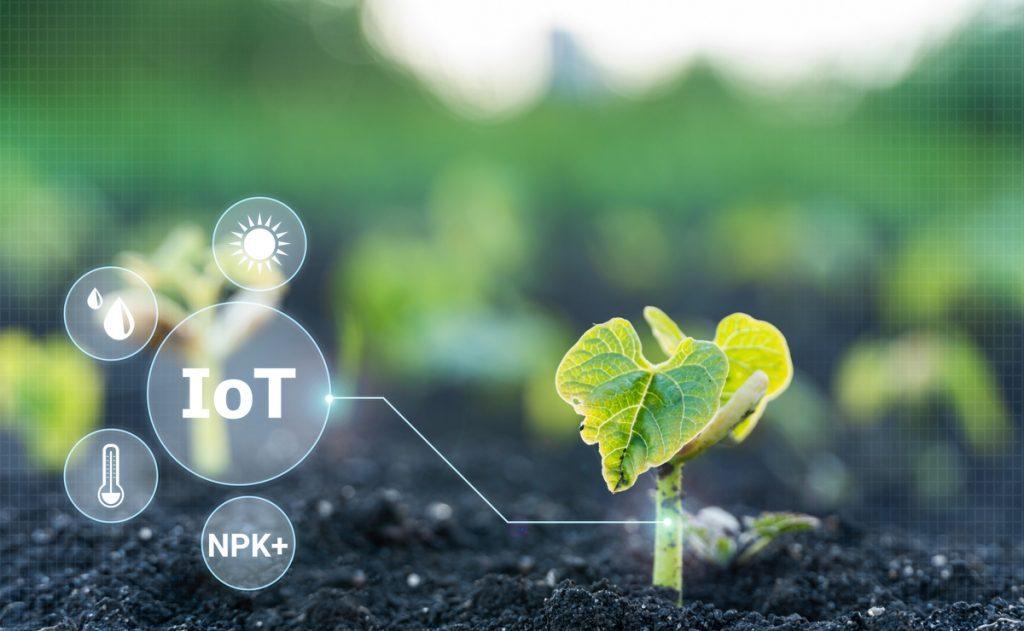
The IoT in Agriculture market is expanding as farmers adopt precision practices to improve productivity and reduce resource waste. IoT systems connect sensors, machines, and analytics to provide real-time visibility into soil conditions, weather, irrigation, and crop health. By measuring moisture, temperature, nutrient levels, and microclimate data, farms can apply water and inputs more precisely. This is increasingly important as climate variability raises risk and margins remain tight. IoT also supports livestock monitoring through wearables that track activity, health indicators, and location. The result is earlier detection of disease, improved feeding efficiency, and reduced losses. For agribusinesses, IoT data helps meet traceability and sustainability requirements, enabling documentation of input use and environmental impact. Adoption is strongest where connectivity and financing are available, but falling sensor costs and new network options are expanding access for small and mid-sized farms.
Core IoT use cases include smart irrigation, field monitoring, equipment telematics, and greenhouse automation. Smart irrigation systems connect soil moisture sensors with pumps and valves, enabling scheduling based on actual plant needs rather than fixed calendars. Weather stations provide localized forecasting that improves planting and spraying decisions. Remote sensing via drones and satellites complements ground sensors by detecting crop stress, pest outbreaks, and uneven growth. Equipment telematics tracks machine performance, fuel use, and field coverage, helping reduce downtime and improve operations. In controlled-environment agriculture, sensors manage temperature, humidity, CO₂, and lighting to optimize yields and quality. Data integration is critical: the value increases when sensor data combines with farm management software, agronomy models, and market planning. However, farms face practical challenges: rugged devices, battery life, calibration, and data connectivity across large rural areas. Therefore, reliable hardware and simple maintenance processes are important for sustained IoT use at scale.
Connectivity and interoperability remain central barriers and opportunities. Farms use a mix of cellular, LPWAN (such as LoRaWAN), satellite IoT, and short-range radio depending on geography and coverage. LPWAN supports low-power sensors over large areas, while cellular and 5G support higher bandwidth for machinery and video. Satellite fills gaps in remote regions but can be costlier. Interoperability issues arise when devices and platforms use different data formats and proprietary ecosystems, limiting integration across suppliers. Many farmers also worry about data ownership and privacy, particularly when sharing operational data with vendors or buyers. Cybersecurity is another concern as connected pumps and controllers could be vulnerable if not secured. Adoption improves when platforms provide clear data governance, offline capabilities, and easy-to-use dashboards. Training and local support matter, because technology must fit seasonal workflows and limited technical staffing, especially on family-operated farms.
Looking ahead, IoT in agriculture will become more predictive and automated. AI models will use sensor streams to forecast irrigation needs, pest pressure, and yield outcomes, supporting proactive decisions. Integration with autonomous machinery and variable-rate application will enable closed-loop precision operations. Sustainability reporting will accelerate IoT adoption as buyers and regulators demand traceability for water use, fertilizer application, and carbon impact. Business models may shift toward “farming-as-a-service,” where providers bundle sensors, connectivity, and analytics under subscription plans. For farmers, successful adoption starts with a clear ROI case—water savings, yield improvement, labor reduction, or risk mitigation—and a pilot focused on one high-impact area such as irrigation. As device costs fall and connectivity expands, IoT will increasingly support resilient, efficient agriculture, helping producers adapt to climate stress, resource constraints, and rising demand for food quality and transparency.
Top Trending Reports: